Showing posts with label Gadget News. Show all posts

Tuesday, June 26, 2012

Vizio Announces The Co-Star, A $99 Google TV Box With OnLive Gaming Built In


Watch out, Sony, Vizio is chasing your tail. Just yesterday Sony revealed its latest Google TV hardware, a $199 remake of the company’s first GTV products. And now today, Vizio took to the wires and announced its first player in the Google TV game, the $99 Co-Star.

The Co-Star is a serious contender in this game, too. The product boasts all the Google TV functionality along with additional baked-in apps such as Netflix, Amazon Instant Video, iHeartRadio, and for the first time on a Google TV box, OnLive. With OnLive gamers can demo, watch and actually play games through the cloud gaming service. Plus, all this is available for $100 less than Sony charges.

“Our focus to deliver the best consumer experience continues with today’s announcement of the Co-Star, which delivers a superior smart TV interface that anyone can add to their existing HDTV,” Matt McRae, VIZIO’s Chief Technology Officer said in a released statement. “We combined the powerful features of Google TV™ with an intuitive and easy to use interface, giving users the power to enjoy an entire world of entertainment.”

The Co-Star ships with a dual-sided Bluetooth remote (OnLive’s wireless controllers use Bluetooth) with one side featuring a number pad and touchpad with a QWERTY keypad on the other side. The box also sports 802.11n and USB connectivity options.

Firefox 14 For Android Graduates From Beta, We Go Hands-On


When Mozilla first pushed their latest beta version of Firefox into the Google Play Store last month, it raised a few eyebrows thanks to its dramatic redesign and its claims of “significant” performance enhancements. Now that new version of Firefox (version 14, if you’re keeping track) has cast off its beta trappings, but is it worth your time? Read on to find out.

The name of Mozilla’s game with their latest mobile version of Firefox is performance. Users who took the plunge with Firefox for Android in the early days (and even the not-so-early days) were left with a novel browsing experience that could often be marred by downright slow performance.

“It was a solid product if you were on a high end phone but it was a problem for anything less than that,” said Johnathan Nightingale, Director of Firefox Engineering. “We decided to rebuild it with performance as the focus, and rip apart anything that was slow.” The Android version of Firefox 14 actually went to beta before the desktop version did because the team was concerned about nailing down performance on as many Android devices as they could.

Their effort is certainly apparent in the final product — unlike the previous version (which would temporarily black out the screen on my Galaxy Nexus for a few seconds before displaying the homepage), Firefox 14 springs to life nearly instantaneously after tapping its icon. Loading pages is generally quicker to boot (though still not as downright quick as Chrome), and swiping down through long pages of content is perceptibly smoother than the version that preceded it.

But Firefox’s performance on new devices is only part of the equation. I took the new build for a spin on something decidedly less robust — the Gingerbread-powered Samsung Galaxy Player 3.6, which sports a single-core 1GHz processor. As you would expect, the experience is decidedly less buttery thanks to some pokey hardware, but FF14 still managed to outperform the device’s stock browser in terms of page loading speed and general usability. It’s bound to be a welcome change for users with older or less powerful devices looking for a way to cruise the web with a bit more panache

Firefox 14 is also notable for its inclusion of Flash support, a move that may seem a bit puzzling considering the group’s focus on open web standards like HTML5. Still, it’s hard to deny that there’s still gobs of Flash content peppering the web, and a member of Mozilla’s mobile team mentioned that it took “a bunch of engineering work” to get things working properly across the multiple versions of Android that Firefox 14 plays well with. It goes without saying that running Flash content on an Android device has never really been the most pleasant experience, but it’s here and it works if you somehow feel as though your life is somehow less meaningful without it.

To sweeten the pot for existing Firefox users, the bookmark syncing Firefox Sync feature still allows users to access bookmarks, browser histories, saved passwords, and tabs stored on different devices.


Mozilla has also completely revamped their original mobile UI in favor of one that places much more emphasis on the address bar. It took a ton of getting used to but I was fan of Mozilla’s original concept, one that had users swiping to the left and right to access a list view of their other browser tabs and a control panel for bookmarking and back and forward through webpages. Now all that functionality is crammed into a smaller area, and naturally some changes had to be made.

Perhaps most frustrating is the fact that the reload button has been relegated to a life hidden away from plain sight. In order to reload a page, users now have to tap the menu button first in order to find the option, something that seems terribly odd since it used to live right inside the address bar. Not all of the design tweaks are questionable, as the tab view button nestled next to the address bar displays a running total of how many tabs are open — tapping that button also displays those tabs as real-time thumbnails.

At this point though, Firefox for Android also lacks a few features that have become widely used in rival browsers. The ability to request the desktop version of a page (as seen in the stock ICS browser and the Chrome’s Android beta) immediately comes to mind because of how often I need to use it, though Mozilla’s mobile team confirmed that the feature would appear in a new release sometime this summer. As such, it becomes clear that Firefox isn’t going to be for everyone — fans of sheer performance have Chrome (though Nightingale says that he’d put Firefox 14 against Chrome anyday), and browsers like Dolphin offer features like gesture-based navigation and voice control to wow their users.

But in the end, Mozilla doesn’t view this as a contest. Rivals like Chrome and Dolphin bring different browsing experiences to the table, and Nightingale noted that the cross-pollination of features and ideas will only strengthen the choices users have when it comes to exploring the web. That’s what Mozilla is really after here, and with Firefox 14 they’re doing their part to contribute to a better web.

Windows 8 Phone to feature an electronic wallet with NFC fonctionality

According to Microsoft, its new Windows 8 Phone will feature an electronic wallet with NFC functionality, but one that is similar to Google Wallet and Apple's Passbook, and will still be compatible to U.S. wireless carriers as well. Demonstrating the Near Field Communications (NFC) capabilities of Microsoft's new phone operating system, Joe Belfiore couldn't demonstrate pay-by-tap, as he didn't have a suitable SIM handy, but that issue may be what pushes Windows Phone 8 to the front when it comes to paying for items with a mobile phone.

Belfiore did demonstrate NFC-enabled business cards, picking up a URL from an NFC chip embedded in a copy of Wired and setting up a peer-to-peer Wi-Fi link to play a Scrabble derivative, but despite flashing a wallet boasting credit and debit cards from Chase he could only use them online as his SIM didn't have the requisite secure element for paying with a tap of the mobile handset.

As well as a short-range radio connection, pay-by-tap needs a secure location in which to store the cryptographic keys and do the encryption used to authenticate payments, but where that secure location goes is still the subject of intense and increasingly political debate.

Wireless network operators say that the SIM is the perfect place-- it's already secure and if the customer changes handsets then their wallet comes with them, but that places the payment schemes firmly under the control of the network operator and if customers change networks then they'll have to manually move their wallets.

For it's part, Google's compromise is to simply have one secure element in the phone (under the control of Google) but still support a SIM-based secure element if that's what users want, but all the while reminding them it's not something they need.

The Android Wallet application will merge the two so that users shouldn't see the complexity, but when they change handsets or wireless carriers it might become more obvious to them.

By contrast, Microsoft is leaving the pay-by-tap business to the network operators, and has already signed an agreement with Orange for the first deployments in France although other mobile operators should be quick to jump as their collaborative efforts to create standard platforms come together over the next few weeks.

And of course, in the United States, that's under the ISIS brand. In the United Kingdom, it's known as Project Oscar and is being challenged by Google and PayPal who've complained that their inability to use the SIM is anti competitive. Both ISIS and Oscar will store coupons as well as credit cards, which is important as the Coupon business is considered hugely important to those who intend to generate revenue through advertising.

Having given up on getting a percentage of the transaction fee, the mobile operators are now hoping that coupon revenue will fund the deployment of NFC handsets, but that's not going to happen if Google and Apple are in control of that segment.

Apple and Google both see the coupons section of their e-wallets as critical revenue streams. Apple's wallet contains only tickets and coupons, for the moment at least, but Microsoft seems happy to let the network operators compete with app providers for that market rather than running their own couponing service.

Windows 8 Phone provides a consistent interface, not a competing service, and that could be as critical as any other feature Windows Phone can boast. It will be interesting to see how it picks up in the field with the average consumer.

Friday, April 13, 2012

Top 10 Low Cost Tablets in India

If you are searching for low cost tablets in India, you must be aware of the fact that most of these products come along with some truly great features, such as GPS, Wi-Fi and 3G. Therefore, the low price tags do not relate to low quality. On the contrary, these tablets are able to support different applications, just as any other types of tablets. The below given paragraphs present the most affordable tablets that are available in India these days.

 Top 10 Budget Tablets In India :

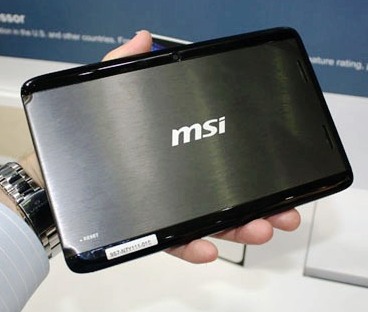
1) MSI WindPad 100A:


This is a very slim device that comes equipped with 1280 x 800 IPS. It provides different ports, including 3.5mm audio jack, HDMI and USB.

It accommodates a front camera of 2MP and a rear camera of 5MP. This device is powered by the Tegra 2 processor that comes together with 2GB RAM. There are two options available, the 16GB and 32 GB tablets. The price should be around Rs 17000.

2) HCL Sakshat Tablet:  


This tablet has a 7-inch display, USB ports, external hard drive and sports different applications, including the most common ones, such as Open Office, PDF viewer, Power Point, Excel, Word, video streaming, sip/unzip facility, web browsing, and flash video. Its a wonderful discovery in the tablets market and costs only $35, i.e Rs 1500 (approx).

3) MSI WindPad 100W:

The WindPad 100W provides specifications that are pretty much similar to those of the WindPad 100A. However, there are a few small differences from which the most important one relates to another processor type, which in this case is Atom Z530 of 1.6GHz.


This device also comes embedded with SRS PC sound system, biometric software, control system, photo manager and some other characteristics. This is little costly compared to other devices and is worth Rs 34990.

4) Reliance 3G Tab:  


This tablet provides a 7-inch display, being powered by Android 2.3. It also comes with micro SD storage space which can support up to 32GB. The tablet has two cameras of 2MP. It sports various features, including video streaming, GPS, voice calling, mobile TV and others. Reliance have priced it at Rs 12999.

5) MSI Enjoy 10:

This tablet is another low cost alternative. Cheaper than the WindPad 100A and 100W, this option is ready to deliver different low-end specifications.


It comes along with a processor of 1.2GHz ARM Cortex A8, which can support different applications.The device also presents 512MB of RAM, 4GB or storage, 2 cameras of 2MP each, and a great display that ensures a resolution of 1024 x 768 pixels. Price of this tablet is Rs 14999.

6.) Spice MI-720:

This tablet promises to become a very popular choice of many Indian consumers. And this is mainly because it intends to replace the well-known Mi-700, which runs on the operating system, Android 2.2 Froyo.


The Spice Mi-720 runs on Android 2.3 and features an updated processor of 800MHz. Other specifications include 512 MB RAM and ROM, VGA front and rear cameras of 3MP, Bluetooth, Wi-Fi, SIM and SD card slots. It may cost around INR 17000 – INR 20000.

7) MSI Enjoy 7:   


Similar to the aforementioned tablet, Enjoy 10, this tablet presents similar capabilities. The main difference consists of the size of the tablet and display’s characteristics, which highlight a resolution of 800 x 480 pixels. Any other features remain the same.The price of the device is Rs 13999 (Approx).

8.) Zinglife ZL101:  


This 10-inch tablet is proposed by Zinglife, being powered by the operating system, Android 2.2. It comes with a processor of 1GHz, 512 MB of RAM and RJ45 broadband port. The price is estimated at Rs 12300.

9) Beetel Magiq Tablet:   


Developed by Beetel Teletech, this low cost tablet brings in the Android 2.2 operating system and 8GB of memory, which is extendable to 16 GB. The tablet also provides a long battery life, front and back cameras of 2MP, Wi-Fi and 3G functions. The price of this tablet is Rs 8999.


10) Wespro Digital ePad:   

.

This is another great alternative that comes along with different features. These features include Android 1.9 operating system, a processor of 400MHz, 128MB of RAM, expandable memory up to 32GB, Wi-Fi, MP3, MPEG, WMA DIVX and XVID file formats. This tablet is for sale at its official site for Rs 5999.


Top 5 Android Apps for 2012

Who says the competition on mobile OS is slack? Well, this is not applicable with Android and Apple users. Last year was a breakthrough for Google’s mobile OS. Android has become one of the favorites and sought-after smartphone platform despite the plagued lawsuits. It didn’t only become popular, but the market boomed having 400,000 app downloads for its users. With Google partnering with mobile manufacturers, expect greater things this year on its system as there will be more available applications right there on your fingertips. Below, we have compiled the Top 5 Android Apps for 2012 that we would like to get on our hands. Take a look at the newest apps on Android.


Ninja Dash

Ninja Dash is an addictive game that any android user should download. The Ninja apprentices become the Ninja heroes! If you’re into speed and accuracy, Ninja Dash is the best fast paced running game. Well, it actually involves levels from easy, hard, to crazy and set it according to your preferences. In this ninja adventure, you’ll jump and slide, and as you get along the way. Avoid the traps and cliffs and these takes a maze of booby traps in order for you to survive. Ninja Dash is available for download at the Android Market. It is compatible with devices running Android 2.0 and higher.


Zombie Dash

Bring back the child in you as you play this cool arcade game called Zombie Dash. The game is pretty simple with stunning graphics. Basically, the game is more of hitting the zombies and running over them by jumping and shooting them. The game starts in the Zombie City. See your town with dead men walking. Of course, there’s only one thing to do in this kind of situation, you cut down the wave of zombies in this unlimited shooting adventure. The controls are visible, so you can jump and shoot them. Kill the zombies by using submachine gun and special weapons. So what’s the secret in this game? You just have to run and run as far as you can and enjoy four different adventure worlds on your smartphone. It’s fun and addictive. Zombie Dash is available for download on mobile devices running Android 2.0 and higher.


Tiki Kart 3D

Enjoy a full pack 3D kart racing on your Android devices with Tiki Kart 3D. Take control over the vehicle and drive with exceptional graphics, speed and crashes with Tiki Bobby. Now get your wheels on a giant piece of fruit and enjoy the ride. If you think, this will be a traditional race track; you might want to think again. Go further along the road as you get your fruit tropical drink, and if you want to get it more serious there’s a big heavy log or volcano lump of rock you can ride and be the big bully down the road. You will experience death defying jumps, speed through boost pads, spiral corkscrew turns and down the race of fun-filled 15 tracks. What’s different in this kart racing is that you can fire up your missile to plow your way through the competition. This is an awesome game you shouldn’t miss. Tiki Kart 3D is available for download on mobile devices running Android 1.6 and higher.


Fruit Ninja: Puss in Boots

The popular game in Apple Store is now available on the Android Market. Enjoy a fruity and juicy game this year on your smartphone devices with the dashing swashbuckler Puss in Boots. Prepare your fingers as you get familiar with fruit slicing action with exciting challenges as you go further. Each level will thrust you into a fruit slicing fiasco like never before. Enjoy a massive fruit from the Giant’s castle, timing and precision challenges and fruity onslaughts as new obstacles arise. Now there’s a catch, you get to throw down the most-requested addition in Fruit Ninja – the tomato. So get ready with your blades and slice efficiently with Ninja’s reflexes to get high scores. Fruit Ninja: Puss in Boots is available for download on mobile devices running Android 2.1 and higher.


Mega Mall Story

Mega Mall Story is finally available on Android market. Enjoy this management simulation game as you design your own mega mall tower with mega proportions to attract more customers. Be on top as you go further to get the 5-star status in this mall-management simulation game. You can also add your own fast-food joints such as restaurants, elevators, stairs and even a heliport. You can all do these things at the touch of the finger. Just like any simulation game, you can attract more customers by investing on your surrounding area by building your affluence. So get ready and build your own mega mall as neatly as you can. Mega Mall Story is available for download on mobile devices running Android 1.6 and higher.


Friday, April 6, 2012

Top 10 Most Powerful Tanks of the World

A tank is a tracked, armored fighting vehicle designed for front-line combat which combines operational mobility and tactical offensive and defensive capabilities. Firepower is normally provided by a large-caliber main gun in a rotating turret and secondary machine guns, while heavy Armour and all-terrain mobility provide protection for the tank and its crew, allowing it to perform all primary tasks of the armored troops on the battlefield. These tanks serves as the key medium of transportation in the country's army. Here we have listed the top 10 most powerful tanks from all over the world. Take a look at it one by one...

10. M1A1 Abrams (USA) :


The main battle tank of American military sits in the top with its 120mm smooth-bore cannon, classified Chatham armor and a 1500hp engine giving it a top speed of 40mph. Equipped with advanced fire-control computer and damage control systems; it is surely the most hi-tech. Never defeated in a conventional tank battle but it has suffered in the hit-and-run tactics in Iraq. This tank is an American third-generation main battle tank. The tank is named after Gen. Creighton Abrams, former Army Chief of Staff and Commander of US military forces in Vietnam from 1968 to 1972.

9. Challenger 2 (UK) :


Challenger 2 is a British main battle tank (MBT) currently in service with the armies of the United Kingdom and Oman. It was designed and built by the British company Vickers Defense .The current British main battle tank has seen in action in Iraq. One Challenger was hit by eight RPG’s and a MILAN anti-tank missile, but its crew survived unharmed though shaken. It also uses the same Chatham armor as the Abrams. It can survive 14 hits from rocket propelled grenades and from one MILAN anti tank missile.

8. Al-Khalid (Pakistan) :


In 1990 Pakistan embarked on this project to develop its own tank and within 10 years it has designed manufactured and tested the product which is now in production. This compared to an average time of 13 to 15 years to mature a tank development programmed for most of the western Countries with substantial experience in tank design and manufacture. It is worth mentioning here that it took India 25 years to develop her project of Arjun tank and cost her considerably more. The 125mm smooth gun of the tank is also produced locally. The tank is equipped with night vision equipment and explosive reactive armor for higher level of battlefield survivability. After the field trials with Pak Army, the tank was officially handed over to Pakistan Army on 23 September 2004.

7. T-90 (Russia) :


The T-90S is the latest development in the T-series of Russian tanks and represents an increase in firepower, mobility and protection. It is manufactured by the Uralvagonzavod Plant in Nizhniy Tagil (Potkin’s bureau) of the Russian Federation. The T-90 is a Russian main battle tank and presently the most advance tank in service with the Russian Ground Forces and Indian Army. It entered service in 1992.

6. Leclerc (France) :


The Leclerc main battle tank (MBT) built by Giat Industries is operational with the French Army and the armed forces of Abu Dhabi of the United Arab Emirates. The Leclerc was first operational with the French Army in 1992 and with UAE in 1995. Leclerc mk2 tanks with improved software and engine control system entered production in 1998. The French Army has 354 Leclerc MBTs in service and in September 2001 ordered the final tranche of 52, concluding a total order of 406 (plus 20 armoured recovery vehicles). Deliveries completed in October 2007.The Leclerc is the main battle tank of France created by Nexter. It was named for Gen. Philippe Leclerc of WW II. It entered service in 1992 and is also operated by UAE – United Arab Emirates. The French Army has a total of 406 Leclercs and the UAE has 388. A unit of Leclerc is worth ₣ 29,000,000 in 1993.

5. Leopard 2 (Germany) :


The Leopard 2, was first produced in 1979 and is in service with the armies of Austria, Canada, Chile, Denmark, Finland, Germany, Greece, the Netherlands, Norway, Poland, Switzerland, Sweden, Spain and Turkey, with over 3,200 produced. The Leopard 2 is the main battle tank of Germany. It entered service in 1979. It first saw combat in Kosovo with the German Army and has also seen action in Afghanistan with the Danish and Canadian ISAF forces. The Leopard 2 is one of the most expensive tanks in the world where a single unit is worth US$4.5 million (Leopard 2A6).

4. Merkava ( Israel) :


First introduced in 1977, the Merkava was design with crew safety and protection in mind. Though low in mobility, it has adapted well to the urban nature of warfare faced by the Israeli forces. But its complex design lowers its production rate. The Merkava, which is means Chariot in Hebrew, is the main battle tank of Israel Defense Forces. A Merkava tank is worth $4.5-$5 million in 2006. The turret assembly is located nearer the rear that gives the crew additional protection against a frontal attack. The rear entrance’s clamshell-style doors provide overhead protection when off- and on-loading cargo and personnel.

3. CI Ariete (Italy) :


The Ariete CI is currently being brought into service and studies are being carried out for an advanced second or third-generation battle tank. The Italian Army took delivery of its first Ariete main battle tank in December 1995. This tank carries the latest optical and digital-imaging and fire-control systems, enabling it to fight day and night and to fire on the move. The first deliveries were in 1995, and the last occurred 7 years later in August 2002.

2. T-84 (Ukraine) :


The T-84, the main battle tank of Ukraine, is one of the fastest existing MBTs in the world, It entered service in the Ukrainian Armed Forces in 1999.This tank was developed from Soviet T-80. The T-84 Oplot is an advanced version incorporating an armored ammunition compartment in a new turret bustle. The T-84-120 Yatagan is a prototype model intended for export, mounting a 120 mm gun capable of firing standard NATO ammunition and guided missiles.

1. Type 99 ( China) :


Type 99, a 3rd generation main battle tank operated by the Peoples Liberation Army of China, is the fastest tank in the world. The ZTZ99 MBT is considered one of the 12 best tanks in the world. A unit of Type 99 is worth ¥ 17,417,659 Renminbi, approximately US$2.5 million. It is also known as ZTZ-99 and WZ-123. The newest and much improve variant is the Type 99KM It is currently the most advanced MBT in the People’s Liberation Army. It entered the PLA service in 2001.

Saturday, March 24, 2012

Motorola Connected Home Gateway home automation all-in-one hits the FCC with Verizon tags

We first got our eyes on Motorola's Connected Home Gateway home automation box during CES 2012, and now that it's passed through the FCC it should be ready to do its all-in-one magic in real consumer's homes sometime soon. What makes this device special is its ability to speak more than one of the various wireless home control protocols currently in use, easily connecting to, controlling and spitting out macros to make multiple things happen with a minimum of user interference or setup. Want to dim the lights, lower the temperature and turn on security cams as soon as you step outside your door? It can do that. This will all be a part of Verizon's Z-wave based Home Monitoring and Control system at some point, if you're still wondering what possibilities are out there, check out our CES demo video embedded after the break.

NVIDIA CEO suggests Kepler GPUs could be headed to future 'superphones'

NVIDIA looking for a piece of next-generation smartphones shouldn't come as much of a surprise to anyone, but CEO Jen-Hsun Huang dropped a few details in a recent email to staffers that's sure to spur at least a little excitement. As AnandTech reports, in addition to marking the launch of the company's new Kepler-based GeForce GTX 680 graphics card, he also looked towards future possibilities for the GPU, noting that "today is just the beginning of Kepler," and that "because of its super energy-efficient architecture, we will extend GPUs into datacenters, to super thin notebooks, to superphones." Not surprisingly, that's about as specific as things got as far as mobile devices are concerned, with no mention whatsoever as to when we might see such Kepler-based "superphones."

Huawei Fusion arrives at AT&T, lets you Go prepaid with Gingerbread for $125

Hey, not everyone needs a bunch-of-core superphone tied down to a two-year contract, so it's always nice to have some solid prepaid options, right? If you shook your head yes to that, you'll be pleased to know that AT&T's just added the Android Gingerbread-loaded Huawei Fusion to its GoPhone lineup. The device features a 3.5-inch (320 x 480) display up front, while on back there's a 3.2-megapixel shooter. Other goodies include Bluetooth 2.1, FM radio functionality and support for up to 32GB of storage via MicroSD. If your still nodding your noggin, the Fusion and its (essentially) utilitarian specs can be yours for the keeping, sans contractual commitment, for just $125. You'll find more info at the links below.

HP launches its Application Lifecycle Intelligence (ALI) development tools

Hewlett Packard announced earlier this morning a whole slew of new development tools, software suites and services aimed at accelerating application development lifecycles, with an emphasis on mobile apps and cloud solutions used in IT, mobile apps as well as tele-medicine applications.

HP is looking to make better use of the tools already provided by some social sites to allow better collaboration within work groups, and has added features designed to help mobile app developers and to reduce the development lifecycle to just days instead of months.

"Today, modern enterprise applications require a much different approach to original design and testing phases than traditional software applications," said Jonathan Rende, vice president and GM of application transformation solutions at HP.

"Overall, HP ensures that enterprise applications provide the highest level of quality, security, availability and scalability while elevating the user experience to an entirely new level."

On the social side, HP Application Lifecycle Intelligence (ALI) now uses social-media methods to track who is working on each stage of a software development project, and what input they have had so far, and at every phase of the development cycle.

HP's new Enterprise Collaboration suite allows real-time conversations on source code and links them to action items so that everyone in the team can benefit.

For enterprise mobility applications, HP has teamed up with Perfecto Mobile to speed up smartphone and tablet application development by allowing automated testing for multiple mobile handset types. There's also a new module for taking on-the-fly information on SAP Netweaver and Sybase Unwired platforms in the enterprise segment.

Then, HP Anywhere has also been updated to allow mobile phone users access to defect tracking, troubleshooting and service health monitoring, ensuring that as long as you've got your mobile app you can still get some work done and then post on an executive scorecard.

In the next few weeks, HP will also announce some new development tools that will enable app developers to collaborate on M2M (machine-to-machine) projects that can be used in the IT industry as well as in mobile medicine apps.

Friday, March 23, 2012

Minecraft heads to the Xbox 360 on May 9th, do not adjust your TV sets

It may not yet be quite the massive cultural phenomenon that Angry Birds is, but Minecraft is certainly no slouch in the ranks of little-games-that-could, and it's now set to expand its reach even further. Microsoft confirmed today that Minecraft: Xbox 360 Edition will be available for download on May 9th, with it setting you back 1600 Microsoft Points (or $20). That will apparently buy you a fairly full-featured version of the game, including a revamped crafting interface, "natural controller movements," a tutorial mode, and split-screen multiplayer in addition to multiplayer over Xbox Live. Hit the links below for a closer look at it and the rest of the games in Microsoft's "Arcade NEXT" promotion.


Source

Friday, March 16, 2012

Android 4.0 Ice Cream Sandwich Released For Samsung Galaxy S II In Europe

The Android 4.0 ICS software update was presented half a year ago at Samsung + Google “Unwrapping Ice Cream Sandwich” event in Hong Kong along with search giant’s developers smartphone, Galaxy Nexus, world’s first smartphone to come pre-loaded with Android 4.0.

Previous rumors were saying that the Android 4.0 Ice Cream Sandwich update will arrive on Samsung Galaxy S II on March 10th, but the South Korea-based company have dismissed the rumors via Twitter.

Finally the big day have arrived and the rumors have been confirmed, as Samsung announced on Twitter that the Android 4.0 Ice Cream Sandwich firmware update for Samsung Galaxy S II will be rolled out starting today. The first wave will hit Poland, Hungary, Sweden and South Korea. Other countries will follow shortly and soon the Android 4.0 ICS update for Samsung Galaxy S2 will become global.

We expect the Android 4.0 Ice Cream Sandwich software update to hit most European countries by the end of the week. No word yet about the US arrival of the Android ICS 4.0 update.

But the Samsung Galaxy S2 owners aren’t the only ones with reasons to celebrate. Samsung announced that the Android 4.0 Ice Cream Sandwich software update will soon arrive Samsung Galaxy Note, Galaxy R, Galaxy Tab 7.0 Plus, 7.7, 8.9 and 10.1. On the other hand Samsung Galaxy S, Galaxy Tab 7, Galaxy S Plus, Galaxy S SCL and Galaxy W will Android 2.3 Gingerbread firmware upgrades by the end of the month.

Usually the owners of the unlocked terminals are the first to receive the firmware updates, as the carriers are free to roll out the update whenever they want.

If you are one of the lucky Samsung Galaxy S2 owners that received the Android 4.0 ICS update we would highly appreciate to share your opinions and tell us how the OS runs on your device. Remember that the close by swiping and face unlock features come packed with the Android 4.0 update, thus we’d love to know how they work on your Samsung Galaxy S2. We are also curious to see whether the update brings improvements for the camera or for the battery life.

BlackBerry PlayBook Mini Keyboard Release Date Is March 23rd?

BlackBerry Playbook’s first birthday is next month and even though its hardware specifications are decent even for new-generation tablet, the RIM tablet haven’t became as popular as the officials of the Canada-based company expected. The operating system’s user interface isn’t bad, but the lack of applications in the dedicated store played an important role in customer’s decision when it came to buying the RIM slate.

The flagship model of the RIM’s tablet line-up, BlackBerry 4G PlayBook LTE features a 7.0-inch TFT capacitive touchscreen with 16M colors and a resolution of 600 x 1024 pixels, 1GB of RAM and 16/32/64GB of internal flash storage (microSD card slot not included). RIM placed a dual-core 1 GHz Cortex-A9 TI OMAP 4430 CPU inside their BlackBerry 4G Playbook LTE tablet, helped by an PowerVR SGX540 GPU.

BlackBerry Playbook comes packed with RIM’s proprietary BlackBerry Tablet OS based on a swipe user interface. In terms of connection, RIM’s flagship tablet comes with WiFi 802.11 a/b/g/n, Bluetooth 2.1, microUSB 2.0, micro HDMI out, 3.5mm jack and 4G LTE chip. BlackBerry 4G Playbook LTE features a 5 megapixel rear-facing camera with autofocus and support for full HD 1080p video recording and 3 megapixel user-facing camera.

Rumor has it that the Canada-based smartphone and tablet maker is planning to introduce a Bluetooth QWERTY keyboard for their 7-inch tablet. Unofficially dubbed BlackBerry PlayBook Mini Keyboard, it might hit the market on March 23rd at a price of $120.

The BlackBerry PlayBook Mini Keyboard also comes with a multi-touch touchpad. An online store in North America have started the pre-orders session ahead of the official announcement. It would be interesting to see whether RIM will develop a new generation of the PlayBook slate, now that their tablet operating system have been reached version 2.0.


Nokia 10-inch Windows 8 Tablet To Debut In Q4 2012

After their attempt to return in the battle for the smartphone market supremacy, rumor has it  that Nokia is preparing to launch their first tablet. Nokia’s partnership deal with Microsoft is going to give birth to an interesting tablet that will be running Windows 8. Windows 8 consumer preview was launched on February 29th and is already available for download, so anyone curious to see how Microsoft’s new operating system works can grab it from here.

According to Digitimes, unofficial sources inside the Finland-base phone maker have confirmed that Nokia will launch a tablet running on Microsoft’s Windows 8 by the end of the year. Rumor has it that the Windows 8-powered Nokia tablet will feature a dual-core Qualcomm Snapdraogon S4 processor and 10-inch display, aiming directly towards Apple’s new iPad.

It seems that the Nokia Windows 8 tablet will be launched in Q4 2012, and the Finns could become the world’s first company to build an Windows 8 tablet. After the Finland-based company teamed-up with Microsoft, it managed to become world’s biggest Windows Phone-powered smartphones vendor, which basically helped grow up on the smartphone market, a segment where the Finns were loosing ground lately.

As about the Nokia Windows 8 tablet’s technical specs, rumors say that it will come with a dual-core Qualcomm chipset and 10-inch capacitive touchscreen, but the display resolution is yet a mystery.

By teaming-up with Nokia, Microsoft tries to bite from Apple’s and Google’s market share (both on the tablet and smartphone market), while Nokia attacks the tablet segment, where a lot of manufacturers are fighting for supremacy. Anyway, Apple is no longer the incontestable leader of the tablet market as the Cupertino-based company’s market share dropped from 94.3% to 57.6% over the past one and a half years.

Digitimes reports Nokia’s 10-inch Windows 8 tablet will be manufactured by ODM Compal Electronics, based in Taiwan, with the first batch of shipments to top 200,000 units.

iPad Pre-Order Units Already Sold Out Causing Shipment Delays

A few days ago at a press conference in San Francisco, Apple have unveiled the third-generation of their iOS tablet, dubbed iPad. The new iPad is thicker than its successor and it comes with sharper edges and new features.

Only a couple of days after the new iPad was officially unveiled, Apple issued a official press statement quoted by USA Today, saying that the all the iPad units available for the pre-order session have been sold out. Moreover, the officials of Cupertino-based giant admits that the demand for the new iPad has exceeded their expectation, but they haven’t disclosed whether it exceeded last year’s pre-orders.

The new iPad comes with a 9.7-inch Retina Display with an amazing resolution of 2048 x 1536 pixels, 16/32/64 GB of internal storage, dual-core Apple A5X Cortex-A9 chipset (likely 1GHz) helped by PowerVR SGX543MP4 GPU (quad-core graphics), 5MP camera with autofocus, 1080p@30fps video recording support and video stabilization and 4G LTE support. As you probably know, the new iPad comes pre-loaded with Apple’s latest mobile operating system, iOS 5.1.

The price of the entry-level iPad Wi-Fi Only 16GB version of the tablet is of $499, while the 4G LTE-compatible version has a price tag that starts at $629.

For the time being, Apple’s US website says that all the iPad units pre-ordered from US will be shipped on March 19th, while in some European countries the customers will have to wait between 2 and 3 weeks if they post a pre-order for the new iPad now.

Everyone expected Apple to run out of iPads sooner or later, but the production of the new iOS tablet begun more than one month ago, thus millions of tablets must have been shipped out for the pre-orders session that started on Wednesday.

Probably tomorrow we will find out how many iPad units Apple prepared for the shipping process that will begin on Friday and we hope that the launch event scheduled for March 16th will not be affected by the high demand registered for the Cupertino-based company’s new tablet.

Nokia Lumia 900 To Arrive At AT&T On April 22nd for $99

Less than half a year ago at Nokia World 2011 event in London, the Finland-based company introduced the first fruits of their partnership with Microsoft, two smartphones running on Redmond giant’s mobile operating system, Windows Phone. I am talking about Nokia Lumia 800 and Nokia Lumia 710.

But the fans weren’t satisfied as the rumors were speaking about a more powerful device, with bigger display and high-end specifiactions. This smartphone never failed to appear and several months later, at CES 2012 in Las Vegas, Stephen Elop, CEO at Nokia, introduced the Lumia 900, a 4G LTE terminal that became the flagship of the Finns’ Windows Phone-powered line-up. Anyway, the 4G LTE Nokia Lumia 900 was designed for the North American market and the Europeans wanted one, too.

The global version of the Nokia Lumia 900 was introduced one month later at Mobile World Congress 2012 and it was basically the same device with the exception of the 4G LTE chip.

A week ago we told you that the 4G LTE version of Nokia Lumia 900 will soon arrive at AT&T and it seems the rumors were pretty accurate, only it’s not as soon as we expected.

Early rumors were saying that Nokia’s Windows Phone flagship will arrive at the US-based carrier on March 18th for $99, but now it seems that the Lumia 900 launch have been delayed. Reports show that the 4G LTE smartphone might join AT&T’s line-up on April 22nd. The good news is that the price will remain the same: $99 on a two-year contract.

Those not aware of Nokia Lumia 900′s techincal specifications should know that the flagship smartphone comes packed with a single core 1.4GHz Qualcomm APQ8055 Snapdragon chipset and Adreno 205 GPU, 512MB of RAM, 16GB of internal storage, front facing 1.3 megapixel camera, 8 megapixel camera on the back with Carl Zeiss optics, autofocus, dual-LED flash and HD video recording capabilities, WiFi, Bluetooth, microUSB, NFC and 4G LTE chip.

As you probably guessed, Nokia Lumia 900 leaves the factory gates pre-loaded with Microsoft’s latest mobile OS, Windows Phone 7.5 Mango. AT&T gave this rumor the “no comment” treatment, so it will be wiser to wait for an official confirmation before getting too enthusiastic about Lumia 900′s debut, which in my opinion can’t be too far away.


Sunday, October 16, 2011

Best Pocket Camcorder – Sony Bloggie Touch Review & Unboxing

If you are a Blogger who loves taking product reviews and unboxing videos then for sure you would be trying out different camcorders but most of them would fail in the quality aspect because either some of the Camera’s are bulky while some of them are good enough but costly which can go above your budget. Here is one very creative and useful camera from Sony which is called as the ‘Bloggie’ and is available in different models based on the consumer requirements and budgets. In this article we are going to review the Sony Bloggie Touch MHS-TS20/S 8GB Model which is currently the best in the series.


Camcorder Design

If you are interesting in taking a video of some small meetup, get together or a funny act going around your blog, would you opt for using a Costly Professional Camera with a Large Lens and a Tripod or would you opt for a Budget Camcorder with awesome recording facility and the size of a mobile Phone? The Sony Bloggie Touch is one of the best in this series because its small, compact, costs $199 and can shoot amazingly great videos.

The overall size of this camera is 2.1-by-4.3-by-0.6-inch (HWD) which is almost around the size of the Apple iPhone 4. The front has a large 3″ Touch Screen using which you can perform different actions with a large RED Button which is useful for capturing videos. One the back you have the camera and the SONY logo.
On the sides of the Camera you the ON / OFF button, one button for taking still photos and on the other side there is a mini-HDMI port for connecting the Bloggie to a HDTV. There is a push-to-pop out USB port in it, that can be used to connect the camcorder directly to the computer to transfer the captured videos or images. Just adjacent to the USB port, there is the socket to fix the camera on a tripod stand for still capturing.

There are no more such buttons, and most of the things can be done using the display screen, where flipping through photos, videos, setting the options for camcorder and capturing pictures etc. can be done. One of the good features of the Bloggie is that it works both in Portrait and Landscape mode, and rotates by itself. Not just the display but the options in it too rotate and arrange themselves when the Bloggie is rotated to switch the viewing mode.
The viewing of the photos and videos is similar to what we see in the Apple gadgets, slide through them with your finger. There are different levels of recording videos and capturing pictures, i.e. the video recording can be done at 1080p, 720p, 640p quality and the still images can be captured at 12MP, 8MP or 2MP quality.

Camcorder Performance

One of the best camcorders that we always have seen was the Flip Mino HD, and Flip UltraHD but they were limited to just a few options, and seemed to have been made to record videos. Nothing extra. But the Sony Bloggie Touch is power packed with features and extras that the pocket-sized camcorders never had. Of course the DSLR cameras can beat it, but we are not comparing the video quality with the professional ones. For a camcorder for this small size and purpose, the video quality is excellent. The videos recorded at both 1080p quality and 720p quality were clear, bright and the colors were beautifully displayed.
One small problem with the audio here is that the recording is too clear and that’s the reason why all the background sounds are noted too. It makes the audio quality a little low, though it is good enough to hear what we actually want to hear.
Autofocus – One of the best features with the Bloggie Touch. With some other camcorders you need to do that yourself by maintaining a distance from the object while recording the videos but the Bloggie adjusts the focus by itself depending on the video quality you preferred, and so you don’t need to keep adjusting the distance for clarity.
Starting up and recording – I liked the speed of starting up of the Bloggie camcorder. Just a few seconds and the Bloggie starts, ready to record the video. When we press the record button, it instantly starts the video recording. This is a lot faster than the other similar-sized camcorders and the professional cameras too, all of which take some time to start up and record the videos.
Orientation – Here we need to remember that for a full screen video quality, the camcorder needs to be used in a landscape mode. Because, when you would hold it vertically the video recording and playback too is done vertically, reducing the quality when we rotate the video purposefully.
Picture quality – Similar to any other cameras, the image quality reduces with zooming in, but I loved the quality of the images produced when capturing in 12MP quality. The pictures are in JPEG quality. I would suggest not to consider this as a digital camera quality provider, as there is no proper image stabilization and no flash too.
Connectivity – The Bloggie camcorder provides an easy connectivity options to the HDTV and to computers, where the flip-out USB arm can help easily connect the device to the computers and a simple software for Windows computer helps in exploring the videos and image files organized in folders. For Mac, the things are far easier although there is no software, the camcorder acts as an external storage. While the connection with the computer is on, the Camcorder has the options to upload the videos to Facebook and YouTube directly.


Final Words

The Bloggie Touch camcorder is one of the perfect pocket-sized camcorders for recording HD videos, and occasionally captures pictures too. The large touchscreen LCD is well responsive, and the design is very sleek with a small size. Though there is no more option to extra accessories and connectivity, the given features can be pretty enough to get things done. The video is captured at various frame rates, and I would limit the capturing to videos due to the lack of flash, and indoor photography is not markedly well.

Friday, October 14, 2011

Size Matters for Samsung’s Growing Suite of Galaxy Tabs

SAN DIEGO — Samsung wants to place a different sized tablet in every pocket you’ve got.
You’re probably already familiar with the Galaxy Tab 10.1. It’s a bit larger than Apple’s iPad, and best suited for the outer pocket of your laptop bag. Then there’s the newly released 8.9-inch Galaxy Tab, a scaled-down version of its bigger brother. This one’s good for toting in a trenchcoat or perhaps even a sport blazer. And now we have the yet-to-be-released 4- and 5-inch Galaxy Player multimedia devices, which slide nicely into a pair of jeans pockets.
Samsung’s strategy is similar to RIM’s with the PlayBook, and Amazon’s with the upcoming Fire tablet: Smaller form factors will attract hesitant, would-be tablet adopters who haven’t sprung for an iPad.
But is a small size and cheap price enough, or must companies like RIM, Amazon and Samsung offer deeper levels of product differentiation? Aside from offering a more totable form factor, the idea behind RIM’s PlayBook is to attract the enterprise sector by playing up RIM’s proprietary security systems and BlackBerry Messenger network — though after this week’s network outages, RIM hardly still has that ace up its sleeve. Amazon, meanwhile, has an entire application ecosystem, extensive media library and its Amazon Prime service to back the Fire. In all, it’s a compelling set of reasons for any tablet newcomer to play with Fire, so to speak.

The Galaxy Player devices are interesting, though don’t seem very compelling compared against their competitive set. They’re essentially Galaxy S2 smartphones without the whole phone part. In other words, they’re the Android equivalent of the iPod Touch. So here’s my question: In a market where iPods are going down in sales with the rise of smartphones, why launch a media player? Are people willing to carry two devices, if not more? Microsoft doesn’t seem to think so.
And then we have Samsung’s not-so-alluring pricing tiers. Despite its reduction in size, the Galaxy Tab 8.9 costs only $30 less than the Tab 10.1, down to $470 and $570 for respective 16GB and 32GB options. Similarly, the Galaxy Players cost $230 and $270 for the 4-inch and 5-inch versions, respectively. Compared to the iPod Touch, however, the Galaxy Players offer less bang for the buck. For $300, you can pick up a 32GB iPod Touch. The 5-inch Galaxy Player costs a bit less at $270, but comes with just 8GB of storage. If storage isn’t important to you, Apple offers an 8GB iPod touch for $200, while the 4-inch Galaxy Player is $230.
Samsung needs to do more with its devices than just switch up their measurements. The adage may be tired, but rings more true than ever: Size may matter to some, but it sure as hell isn’t everything.

Infographic: How Video Games Are Changing Education

Here is an interesting infographic on role play of video games in educating children. Here they clearly pin point on the advantages of playing games. It shows how video games develop different skills in children. Technology has introduced many games on different subjects like literacy games, science games, geography games, logic games, history games etc. This infographic is a torch barrier towards the facts and statistics about the positive and negative aspects of playing games in the classroom. The statistic also shows how much people spent on video games and how it helps in improving educational skills. Many schools use video games in order to teach different topics as learning the fundamentals, role-playing history, designing & developing and social interaction.
The most crucial and important things which one can develop through these games are creativity, teamwork, independent learning, multitasking etc. These are the basic skills which one should acquire for batter living.


Concept of Rotor 360 Camera by Charlie Nghiem

Designer Charlie Nghiem suggested that the concept of the camera called Rotor 360 Camera specially designed for those who like high-tech stuffing technique, but does not like to bother the user guide. Menus and submenus light enough to get lost in them. The design consists of a column that combines all the key functions in one place for optimal use. The column consists of several cylinders stacked on each other. To obtain access to functions and menus to scroll through the cylinder with your finger to the desired function.


Rinakolkata - Find me on Bloggers.com Related Posts Plugin for WordPress, Blogger...